Thursday, 12 April 2012

Neglected Churchyard - 1896

"But while we find the few to be commended, what a common experience it is, on the other hand, to come upon a neglected churchyard; the crippled stones bending at all angles, many of them cracked, chipped, and otherwise disfigured, and the majority half hidden in rank weeds and grass. In some places, owing to climatic conditions, moss or lichen has effaced every sign of inscription or ornament from the old stones; and there are localities which appear to be really unfortunate in their inability to resist the destructive influence of the weather upon their tombs, which, perhaps because they are of unsuitable material, go to decay in, comparatively speaking, a few years. As a rule, however, these relics of our  ancestors need not and ought not to prematurely perish and disappear from the face of the earth. Where the graveyard is still used as a place of interment, or remains as it was when closed against interments, the sexton or a labourer should have it in perpetual care. The grass and weeds should be kept in constant check, and the tombs of all kinds preserved at the proper perpendicular. If not too much to ask, the application of a little soap and water at long intervals might be recommended in particular instances; but all such details depend upon circumstances, and may be left to the individual judgment. Provided there is the disposition, there will always be found the way and the means to make the holy ground a decent and a pleasant place.

Reverence for the dead, especially among their known descendants, will generally operate as a check upon hasty or extravagant "improvements," and it may be expected that those responsible for the administration of local affairs will, for the most part, when they set about the beautification of their churchyard, decide to do what is necessary with no needless alterations. This plan of preservation, as already intimated, is probably the most desirable. But we know instances, especially in and around London, where good work has been done by judiciously thinning out the crop of tombstones, clearing away the least presentable features of the place, and making the ground prim with flower-beds and borders. To do this much, and to introduce a few seats, will leave the graveyard still a graveyard in the old sense, and requires no authority outside the church. It may be prudent to take a vote of the Vestry on the subject as a defence against irate parishioners, but, if nothing be done beyond a decorous renovation of the burial-ground, the matter is really one which is entirely within the functions of the parson and churchwardens. Moreover, although it is not generally known, the expenses of such works are a legal charge against the parish, provided the churchwardens have had the previous countenance of their colleagues the overseers. The account for the due and proper maintenance of the disused churchyard may be sent to the Burial Board, if there be such a board, and, if not, to the overseers, and the cost will in any case fall upon the poor-rate. Converting the ground absolutely into a public garden is quite a different matter, and, notwithstanding its difficulties, it is the course usually adopted. First, the consent of the Vestry is imperative, and every step is carefully measured by a stringent Act of Parliament. A petition for a faculty must be presented to the Bishop of the diocese, and before it can be granted there must be an official enquiry in public before the Diocesan Chancellor—always a profound lawyer, learned in ecclesiastical jurisprudence. Everybody who has any claim or objection as to any particular grave-space, or to the whole scheme altogether, has a right to be heard; all reasonable requests are usually granted, and the closing order, if made, is mostly full of conditions and reservations in favour of surviving relatives and others who have shewn cause for retaining this tomb and that stone undisturbed. In practice it is found that there are not very many such claims, but it sometimes happens that serious obstacles are left standing in the way of the landscape gardener. One almost invariable regulation requires that places shall be found within the enclosure for all the old stones in positions where they can be seen and their inscriptions read; to range them in one or more rows against the interior of the boundary fence is usually accepted as compliance with this rule. Injudicious arrangement occasionally obscures some of the inscriptions, but they are all accessible if required, and anything is better than extinction. It is earnestly to be hoped that at least equal care is taken of the memorials in burial-grounds which are less ceremoniously closed. Where the work is thoughtfully conceived and discreetly accomplished, much good and little harm is done to a populous place by clearing the ground, laying out footpaths, and planting trees and flowers. But the gravestone, the solemn witness "Sacred to the Memory" of the dead, is a pious trust which demands our respect and protection, at least so long as it is capable of proclaiming its mission. When it has got past service and its testimony has been utterly effaced by time, it is not so easy to find arguments for its preservation. There is no sense or utility in exhibiting a blank tablet, and I have seen without scruple or remorse such superannuated vestiges employed in repairing the church fabric. But this, be it understood, is only when the stone is irretrievably beyond memento mori service, and on the clear condition that it is employed in the furtherance of religious work. It is true that a stone is only a stone, whatever it may have been used for, but a peculiar sanctity is in most minds associated with the grave, and we ought not to run the risk of shocking tender-hearted people by degrading even the dead memorial of the dead to profane and secular purposes. And yet, what has become in too many cases of the old gravestones? The very old ones we may perhaps account for, but where are the middle-aged ones of the eighteenth century? It cannot be doubted, alas, that they have in many churchyards been deliberately taken away and destroyed to make room for new ones. Districts comprising many parishes may be pointed out with all their old churches in the midst of their old churchyards, but without one old gravestone standing. The rule and practice have been to quietly remove the relics of the forgotten sires in order to dig new graves for a new generation. The habit, as just said, rules by districts, and this is the case in most matters connected with the subject of this essay. It is a general and remarkable truth that "good" and "bad" churchyards abound in groups. The force of example or the instinct of imitation may explain the fact, but it affords a sad reflection upon the morality of the burial-place. "

Project Gutenburg : GRAVESTONES OLD AND CURIOUS.

With One Hundred and Two Illustrations  BY W. T. VINCENT

Charles Boyce

© Godric Godricson

Premature burial

                                  
"In October, 1837, M. Deschamps, an inhabitant of la Guillotiere, at Lyons, died at the end of a short indispositon. His obsequies were ordered for the next day. On the next day the priests and the vergers, the corpsebearers and conductors of funerals, attended. At the moment when they were about to nail down the lid of the coffin, the corpse rose in its shroud, sat upright, and asked for something to eat. The persons present were about to run away in terror, as from a phantom, but they were re-assured by M. Deschamps himself, who happily recovered from a lethargic sleep, which had been mistaken for death. Due cares were bestowed upon him, and he lived. After his recovery he stated that in his state of lethargy he had heard all that had passed around him, without being able to make any movement, or to give any expression to his sensations. 

It is fortunate for M. Deschamps that the funeral, which was to have taken place in the evening, was deferred until the morning, when the lethargic access terminated, otherwise he would have been interred alive"

From  : PRACTICE OF INTERMENT IN TOWNS EDWIN CHADWICK, (1843)

Thursday, 5 April 2012

Osiris

King's Lynn
© Godric Godricson
The imagery of Resurrection is a recurring theme in Christian art. Unsurprisingly, the Resurrection is a theme that we encounter repeatedly in the graveyard and has special significance at Easter time. Christians repeat the motif of life after like a mantra. It is as if we are all being persuaded and cajoled to see this life as nothing more than a trial for the ‘other’ life.

This ‘other’ life becomes the goal and it is not a surprise if life becomes nothing more than a prelude. The graveyard becomes a cultic phenomena where we gather as a family and as a community to bury the departed and set them on their journey. We say the prayers that will sooth their soul and we implore a suicidal God to look after the departed. We take part in a ‘wake’ or a feast for the soul and whilst we do not  pour a libation onto the ground, we often have a drink to commemorate the dead.

The Resurrection that is preached in the Church is fervently hoped for in the graveyard and the bodies are stacked and layered in hopeful expectation. The proximity of the dead to the living has been seen as a positive feature and the vaults below the Church are a sort of status symbol. The local ruling family were always present in the Church as there were often three generations attending services above ground and many more generations present a few inches below the stone flagged floors.

The living and the dead of the parish were an organic  unity and the living were always able to ask for the intercession of the dead. Now, the intercession of the dead for the living and the living for the dead has always been seen as a good thing. However, this concept seems to be on thin scriptural evidence and seems more like a sort of ‘cultic thing’ where we call on the ancestors for their help. I'm unsure how this is a very Christian concept at all. The idea of calling on my grandmother who has died and gone ahead seems a strange thing when at the same time we in the West denigrate people in Africa for animism and unscriptural practises. Now, I'm sure that both my grandmothers would not refuse me their assistance but is it healthy for a society to build a religion that allows me to call on the departed rather than the living? The cult of the dead seems rooted in our society. The memorial to ancestors in the graveyard confirms our cultural attachment to bones and also to what has been called 'blood in the soil'. The departed in the Earth confirm our identity and some English people have contemporary reverence for ancient martyrs and Saxon saints. The site of the death of King Harold still has resonance for some people and this is the idea of special and holy places playing out in the popular imagination. That Christianity has often taken such sites for itself is perhaps an indication that previous generations understood the specialness of places, events and people and sought to contain that power. Graveyards next to Churches are a way of controlling people as the Church could exclude as much as it included. Unmarried mothers, unbaptised children and the criminal were often excluded unless the people could find a way of subverting the will of the Church.
The Christian God and an association with death is strong and we can see that there is more than a reference to the ancient Gods that die and rise again, Such ancient cults and ancient religions have parallels with modern Christianity. Modern Christians will say that their faith has nothing to do with Osiris of Egypt or the Celtic Gods that wilt and die with the coming of winter and yet we can see parallels that will not go away. Yes, I would agree with contemporary Christians that there are differences. Osiris remains in the world of the dead rather than meeting and greeting his disciples. Osiris does not move and exist in the same plane of existence after his own sort of resurrection. However, Osiris does continue and he does continue to exist in the Kingdom of the dead.  Christians often become quite apoplectic with rage when it is suggested that they have an association with Osiris although for me it is evident that Jesus (as the second person of the Triune God) is a sort of new Osiris for his followers even if slightly different and changed ever so slightly in emphasis by time and culture.

The place where our ancestors are buried is a special place. Even if we will not rest in that place ourselves,  we often know where it is. We sometimes visit ‘gran’ and we know the reason she is buried there.   It is a place for a sort of sanitised ancestor worship. The English may not clap and dance and sing and pour a libation for the dead although we often speak to our grandparents ever so quietly when we go to places they also visited. I have seen people reverently touch headstones  as if they were touching the departed and I have heard people in graveyards speak as if the person were there beside them. So strong is the cult of the dead that we hold commemoration services in graveyards and we rebury the departed when road widening changes the shape of the graveyard and disturbs the bones. Archaeological work is often forbidden in graveyards and when we find bones  there is usually a chaplain on site. So, strong is the attachment to the graveyard that they have become places of occasional pilgrimage and recollection.

In the 21st century, the Christian God who was so well known to our ancestors has become a sort of forgotten God and the association of this God and death are forgotten. God has a continuing place in society but because we no longer feel close to God we have forgotten some of his ways, preferences and 'aspects'; we have forgotten the faces of God. The God we worship at Easter and commemorate at Christmas is the same God of the birth and of the harvest and he is also the God of the dead. We knew this to be true in the past although we have developed a sort of cultural amnesia.

Rice Wicks - Saint Julian's Norwich


Saint Julian's
monumental
inscriptions


Here lieth ye body of
Rice Wicks
who departed this life
December ye 17th 1725
Aged LXX1111
Under this stone in an arched vault is
also interred the body of Elizabeth Wicks
relict of the said Rice Wicks
who departed this life
February 10th 1734 aged 77 years

Susanna Wicks - Saint Julian's Norwich


Saint Julian's
monumental
inscriptions


Here lieth the body of
Susanna Wicks
daughter of Rice Wicks
and Elizabeth his wife
who departed this life ye 8
of October 1727 aged 44

Green Burials - Pentney

© Godric Godricson

When I visited the only green burial site in Norfolk it was a cold day and from the picture you can see the snow on the ground. The weather was in some sort of sympathetic bond with the place as snow whirled round about. Very atmospheric and not encouraging me to stay very long. The cemetery is a field laying alongside the Church at Pentney and has a sort of traditional feel because it is alongside the Church although it has no access to the graveyard. The traditionalist has proximity to a medieval building but the separation s/he possibly desires.  The place was what may be described as 'basically' maintained because it is (after all) a field in the West of Norfolk.

Houghton on the Hill

© Godric Godricson


There aren't many memorials in the graveyard. They were probably robbed out when the Church was largely abandoned by the Anglicans as the village diminished and fell into ruin and disrepair. The memorials that are there are largely 19th Century with probable ashes covertly buried under the cross. There are some memorials although nothing of great consequence. As I have said before England is about "ordinary people living ordinary lives".

War Dead - Great Cressingham

© Godric Godricson


Celtic Cross

© Godric Godricson

The living and the dead - Interview

The condition in which the remains are often found on the occurrence of a death at the eastern part of the metropolis are thus described by Mr. John Liddle, the medical officer of the Whitechapel district of the Whitechapel Union.

What is the class of poor persons whom you, as medical officer, are called upon to attend to ?

The dock labourers, navigators, bricklayers' labourers, and the general description of labourers inhabiting Whitechapel and lower Aldgate.

On the occurrence of a death amongst this description of labourers, what do you find to be the general condition of the family, in relation to the remains. How is the corpse dealt with?

Nearly the whole of the labouring population there have only one room. The corpse is therefore kept in that room where the inmates sleep and have their  meals. Sometimes the corpse is stretched on the bed, and the bed and bed-clothes are taken off, and the wife and family lie on the floor. Sometimes a board is got on which the corpse is stretched, and that is sustained on tressels or on chairs. Sometimes it is stretched out on chairs. When children die, they are frequently  laid out on the table. The poor Irish, if they can afford it, form a canopy of hite calico over the corpse, and buy candles to burn by it, and place a black cross at the head of the corpse. They commonly raise the money to do this by subscriptions amongst themselves and at the public houses which they frequent.

What is the usual length of time that the corpse is so kept?  

The time varies according to the day of the death. Sunday is the day usually chosen for the day of burial. But if a man die on the Wednesday, the burial will not take place till the Sunday week following. Bodies are almost always kept for a full week, frequently longer.

What proportion of these cases may be positively contagious ?

It appears from the Registrar-General's Report (which, however, cannot be depended on for perfect accuracy, as the registrar's returns are very incorrect, I do not think I have been required to give a certificate of death upon more than three occasions), that in the year 1839, there were 747 deaths from epidemic diseases which formed about one-fifth of the whole of the deaths in the Whitechapel Union.

Have you had occasion to represent as injurious this practice of retaining the corpse amidst the living?

I have represented in several communications in answer to sanitary inquiries from the Poor Law Commission Office, that it must be and is highly injurious. It was only three or four days ago  that an instance of this occurred in my own practice, which I will mention. A widow's son, who was about 15 years of age, was taken ill of fever. Finding the room small, in which there was a family of five persons living, I advised his immediate removal. This was not done, and the two other sons were shortly afterwards attacked, and both died. When fever was epidemic, deaths following the first death in the same family were of frequent occurrence. In cases where the survivors escape, their general health must be deteriorated by the practice of keeping the dead in the same room.

Do you observe any peculiarity of habit amongst the lower classes accompanying this familiarity with the remains of the dead?

What I observe when I first visit the room is a degree of indifference to the presence of the corpse: the family is found eating or drinking or pursuing their usual callings, and the children playing. Amongst the middle classes, where there is an opportunity of putting the corpse by itself, there are greater marks of respect and decency. Amongst that class no one would think of doing anything in the room where the corpse was lying, still less of allowing children there.


From  : PRACTICE OF INTERMENT IN TOWNS EDWIN CHADWICK, (1843)

Miasma

                              
                                                  "Miasms arising from churchyards are in general too much diluted by the surrounding air to strike the neighbouring inhabitants with sudden and severe disease, yet they may materially injure the health, and the evidence appears to me to be decisive that they often do so. Among others who sometimes obviously suffer from this cause, are the families of clergymen, when, as occasionally happens, the vicarage or rectory is situated very close to a full church-yard. I myself know one such clergyman's family, whose dwelling-house is so close to an extremely full churchyard, that a very disagreeable smell from the graves is always perceptible in some of the sitting and sleeping rooms. The mother of this family states that she has never had a day's health since she has resided in this house, and that her children are always ailing ; and their ill health is attributed, both by the family and their medical friends, to the offensive exhalations from the Churchyard."


From  : PRACTICE OF INTERMENT IN TOWNS EDWIN CHADWICK, (1843)

Wednesday, 28 March 2012

Farewell to Coptic pope

Farewell to Coptic pope


"Dressed in embroidered vestments and a golden mitre, and holding a gold-tipped staff, his body was laid in a coffin before being placed on a ceremonial throne, which was visited by tens of thousands of people over the past few days". For the rest of this story carried in "Malta Today" follow this link"

Wednesday, 21 March 2012

'Exhalations'

"The evidence is just as indubitable that exhalations arise from the bodies of the dead, which are capable of producing disease and death. Many instances are recorded of the communication of smallpox from the corpse of a person who has died of smallpox. This has happened not only in the dwelling house before interment, but even in the dissecting room. Some years ago five students of anatomy, at the Webb street school, Southwark, who were pursuing their studies under Mr. Grainger, were seized with smallpox, communicated from a on the dissecting table, though it does not appear that all who were attacked were actually  engaged in dissecting this body. One of these young men died. There is reason to believe that emanations from the bodies of persons who have died of other forms of fever have proved injurious and even fatal to individuals who have been much in the same room with the corpse."

From  : PRACTICE OF INTERMENT IN TOWNS EDWIN CHADWICK, (1843)

Thursday, 8 March 2012

Cult of the dead

Great Cressingham
© Godric Godricson
The study of burials and the origins of burials has sparked interest in Christianity as the embodiment  of a cult of the dead.

Christianity is heavily involved with death and this observation comes from a clear association between the Church as a place of worship and the cemetery as a place of burial. Christians have tried to explain their fixation on death, pain and suffering by pointing to the Resurrection as a sign of triumph over death. However, I recently came across the idea of the Christian God as being 'suicidal' in nature and this deeply disturbing thought brings us back to a cult of death. Is the God of the Christians a suicidal deity that became fixated on blood and sacrifice at an early point and did this obsession with death become the core of Christian doctrine? I have no axe to grind in this matter although I do have an idea and I want to pursue this idea for a while and see what happens.

Early researchers have  often made broad generalisations about the cult of the dead, ancestor worship and the saints as a manifestation of earlier deities although without much study.  Generalisations have been made without any methodology.  This cult of the dead is, however, already evidenced in this blog and the more I submit pictures and 'narrative' the more I become aware of the affinity of Christianity, death and the nature of Christianity as a cult of the dead. Just look at the proximity of the living and the dead in many villages and centres of population.

Audrey Haggard
© Godric Godricson
I’m not suggesting that Christianity is merely another “mystery religion” and I’m not suggesting that Christianity is ‘wrong’ or ‘evil’, instead I am saying that Christianity has an agenda that is not always clear and explained. It is as if  an ancient cult of the dead went on to fuel a world religion rather than a religion forming a cult of the dead. This may be pure semantics although I sense that we  have a cause and effect here.

Paganism has many more links with Christianity than  apologists for Christianity would like to acknowledge and this affinity is stronger within Catholicism than more puritan religion, although the cult of the dead is more evident  in the Evangelical  splinter groups than Christians would like to acknowledge.

It is time to see the cemeteries beside the Church as centres of ancestor worship, history and art rather than just cemeteries. Why else would Christians pay so much time and attention to burying the dead so close to the living. The work of Edwin Chadwick shows how bad the situation was in the 19th Century. In this period the living sank wells for  water beside cemeteries and actually absorbed the dead through drinking water, they sat in pews above the vaults of the dead and they walked past stinking burial grounds to gain access to the Church.  The pollution of the environment by this obsession with death is apparent and evident and shines through Chadwick’s work until the worst excesses were swept away by rational secular Authorities.

Over the next few months I want to return to the idea of Christianity as a cult of the dead and see what happens.

 "Through a glass darkly"


"Through a glass darkly"
© Godric Godricson


Vaults

Mr- Hutchinson, surgeon, Farringdon-street, was called on Monday morning, the 15th March, 1841, to attend a girl, aged 14, who was labouring under typhus fever of a highly malignant character. This girl was the daughter of a pew-opener in one of the large city churches, situated in the centre of a small burial ground, which had been used for the interment of the dead for centuries, the ground of which was raised much above its natural level, and was saturated with the remains of the bodies. There were vaults beneath the church, in which it was still the custom, as it had long been, to bury the dead. The girl in question had recently returned from the country, where she had been at school. On the preceding Friday, that is, on the fourth day before Mr. Hutchinson saw her, she had assisted her mother during three hours and on the Saturday during one hour, in shaking and cleansing the matting of the aisles and pews of the church. The mother stated, that this work was generally done once in six weeks ; that the dust and effluvia which arose, always had a peculiarly foetid and offensive odour, very unlike the dust which collects in private houses ; that it invariably made her (the mother) ill for at least a day afterwards ; and that it used to make the grandmother of the present patient so unwell, that she was compelled to hire a person to perform this part of her duty. On the afternoon of the same day on which the young person now ill had been engaged in her employment, she was seized with shivering, severe pain in the head, back, and limbs, and other symptoms of  commencing fever. On the following day all these symptoms were aggravated, and in two days afterwards, when Mr. Hutchinson first saw her, malignant fever was fully developed, the skin being burning hot, the tongue dry and covered with a dark brown fur, the thirst urgent, the pain of the head, back, and extremities severe, attended with hurried and oppressed breathing, great restlessness and prostration, anxiety of countenance, low muttering delirium, and a pulse of 130 in the minute. "

From  : PRACTICE OF INTERMENT IN TOWNS EDWIN CHADWICK, (1843)

Disease

"Mr. Elcock, student of anatomy, slightly punctured his finger in opening the body of a hospital patient about twelve o'clock at noon, and in the evening of the same day, finding the wound painful, showed it to Sir Astley Cooper after his surgical lecture. During the night the pain increased to extremity, and symptoms of high constitutional irritation presented themselves on the ensuing morning. No trace of inflammation was apparent beyond a slight redness of the spot at which the wound had been inflicted, which was a mere puncture. In the evening he was visited by Dr. Babington, in conjunction with Dr. Haighton and Sir Astley Cooper; still no local change was to be discovered, but the nervous system was agitated in a most violent and alarming degree, the symptoms nearly resembling the universal excitation of  hydrophobia, and in this state he expired within the period of forty-eight hours from the injury".

From  : PRACTICE OF INTERMENT IN TOWNS EDWIN CHADWICK, (1843)

Caister Saint Edmund

© Godric Godricson

War dead - Village Memorials

Ashill Parish Memorial
© Godric Godricson

Cornish Celtic Cross

© Godric Godricson


Have a look at Joy Neighbours comments on the Celtic Cross . Joy is a member of the Association of Graveyard Rabbits.


Old churchyards in 1896


Disappearing 1930's Kerb graves
© Godric Godricson
 "That the state of the old churchyards in this country, down to the middle of the nineteenth century, was a public scandal and disgrace, is a remark which applies especially to London, where burial-grounds, packed full of human remains, were still made available for interments on a large scale until 1850 or later. The fact was the more discreditable in contrast with the known example of Paris, which had, as early as 1765, closed all the city graveyards, and established cemeteries beyond the suburbs. One of the laws passed at the same time by the Parliament of Paris directed that the graves in the cemeteries should not be marked with stones, and that all epitaphs and inscriptions should be placed on the walls, a regulation which appears to have been greatly honoured in the breach. In 1776 Louis XVI., recognizing the benefit which Paris had derived from the city decree, prohibited graveyards in all the cities and towns of France, and rendered unlawful interments in churches and chapels; and in 1790 the National Assembly passed an Act commanding that all the old burial-grounds, even in the villages, should be closed, and others provided at a distance from habitations. Other States of Europe took pattern by these enlightened proceedings, and America was not slow in making laws upon the subject; but Great Britain, and its worst offender, London, went on in the old way, without let or hindrance, until 1850, For fifteen years prior to that date there had been in progress an agitation against the existing order of things, led by Dr. G.A. Walker, a Drury Lane surgeon, living in a very nest of churchyard fevers, who wrote a book and several pamphlets, delivered public lectures, and raised a discussion in the public press. The London City Corporation petitioned Parliament in 1842 for the abolition of burials within the City, and a Select Committee of the House of Commons was at once entrusted with an enquiry on the subject.

In the same year (1842) a Export was presented to Parliament by the Select Committee on "The Improvement of the Health of Towns," and especially on "The Effect of the Interment of Bodies in Towns." Its purport may be summed up in the following quotation:

"The evidence ... gives a loathsome picture of the unseemly and demoralizing practices which result from the crowded condition of the existing graveyards—practices which could scarcely have been thought possible in the present state of society.... We cannot arrive at any other conclusion than that the nuisance of interments in great towns and the injury arising to the health of the community are fully proved."


Pentney in the snow
© Godric Godricson
 Among the witnesses examined were Sir Benjamin Brodie and Dr. G.R. Williams. In 1846 a Bill was prepared to deal with the matter, but it was not until 1850 that an Act was passed "To make better provision for the Interment of the Dead in and near the Metropolis." Powers were conferred upon the General Board of Health to establish cemeteries or enlarge burial-grounds, and an Order in Council was made sufficient for closing any of the old churchyards either wholly or with exceptions to be stipulated in the order. One month's notice was all that was needed to set the Act in operation, and in urgent cases seven days; but it was found necessary in 1851 to pass another Act for the purpose of raising funds; and in 1852 a more stringent Act was put upon the Statute Book to deal summarily with the churchyards. This was, in the the following session, extended to England and Wales, the General Board of Health having reported strongly in favour of a scheme for "Extra-mural Sepulture" in the country towns, declaring that the graveyards of these places were in no better condition than those of London.

Consequently, in the years which followed 1850, a general closing of churchyards took place throughout the Metropolis, and to a lesser extent throughout the kingdom, and an active crusade against all similar  burial-grounds was instituted, which may be said to be still in operation. The substitution of new cemeteries in remote and mostly picturesque places was of immediate advantage in many ways, but it did little or nothing to remedy the dilapidated appearance of the old graveyards, which indeed, now that they brought in no revenues, became in many cases painfully neglected, dejected, and forlorn. Happily, in 1883, the Metropolitan Public Gardens Association was established, and its influence has been very marked in the improvement of the old enclosures and their conversion into recreation grounds. The Metropolitan Board of Works, the London County Council, the City Corporation, public vestries, and private persons, have shared in the good work, but the chief instrument has been the Public Gardens Association.


Pentney in the snow
© Godric Godricson
 Of old burial-grounds now open as public gardens in the London district there are more than a hundred. Care is always taken to preserve the sacred soil from profane uses, games being prohibited, and the improvements confined to paths and seats, levelling the ground and planting with trees and flowers. The gravestones, though removed to the sides of the enclosure, are numbered and scheduled, and all in which any living person can claim an interest are left untouched. No stones are ever destroyed in the process of reformation, but previous ill-usage and natural decay have rendered very many of them illegible, and in another century or so all these once fond memorials will probably have become blank and mute.

To the middle of the nineteenth century may also be assigned the change which we now see in the character of our gravestones. Quite in the beginning of the century the vulgar and grotesque carvings and Scriptural barbarisms of the eighteenth century had given place to a simple form of memorial in which it was rare to find the least effort at ornament; but, as soon as the Burial Acts were passed and the old churchyards were succeeded by the new cemeteries, the tasteful and elegant designs which are to be seen in every modern burial-ground were introduced, founded in great measure upon the artistic drawings of Mr. D.A. Clarkson, whose manifold suggestions, published in 1852, are still held in the highest admiration".


Project Gutenburg : GRAVESTONES OLD AND CURIOUS.

With One Hundred and Two Illustrations  BY W. T. VINCENT

Andrew Brown d. 14th January 1768

"Here lyeth the remains of Andrew Brown,
who departed this life the 14th day of
January 1768, aged 66 years. Also of
Mary his wife, who departed this life the
3d day of July 1802, aged 88 years."


The subject scarcely needs to be interpreted, being obviously intended to illustrate the well-known  passage in the Burial Service: "For the trumpet shall sound, and the dead shall be raised ... then shall be brought to pass the saying that is written, Death is swallowed up in Victory. O death, where is thy sting? O grave, where is thy victory?" The reference in another ritual to the Lord of Life trampling the King of Terrors beneath his feet seems also to be indicated, and it will be noticed that the artist has employed a rather emphatic smile to pourtray triumph.

It was but natural to suppose that this work was the production of some local genius of the period, and I searched for other evidences of his skill. Not far away I found the next design, very nearly of the same date.


Project Gutenburg : GRAVESTONES OLD AND CURIOUS.

With One Hundred and Two Illustrations  BY W. T. VINCENT

Brick lined Grave


Caister Saint Edmund
© Godric Godricson


Smells

Ashill Parish Church and Cemetery
© Godric Godricson
"Undertakers state that they sometimes experience, in particularly crowded grave-yards, a sensation of faintness and nausea without perceiving any offensive smell. Dr. Riecke appears to conclude, from various instances which are given, that emanations from putrid remains operate in two ways, one set of effects being produced through the lungs by impurity of the air from the mixture of irrespirable gases ; the other set, through the olfactory nerves by powerful, penetrating, and offensive smells. On the whole, the evidence tends to establish the general conclusion that offensive smells are true warnings of sanitary evils to the population".


From  : PRACTICE OF INTERMENT IN TOWNS EDWIN CHADWICK, (1843) [Link]

Sunday, 4 March 2012

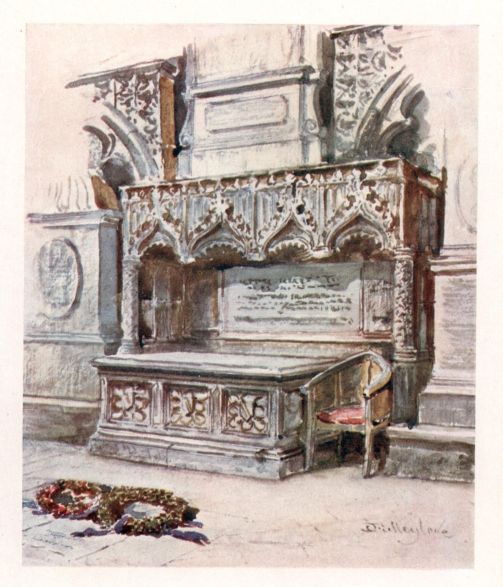
Chaucer's Tomb - Westminster Abbey


Chaucer's Tomb

Lead coffins


"The bursting of leaden coffins in the vaults of cemeteries, unless they are watched and "tapped" to allow the mephitic vapour to escape, appears to be not unfrequent. In cases of rapid decomposition, such instances occur in private houses before the entombment"


From  : PRACTICE OF INTERMENT IN TOWNS EDWIN CHADWICK, (1843)

Saturday, 3 March 2012

Jemma Chapman - d. 26th December 1899

© Godric Godricson

Edwin Chadwick - Disease (1842)

"Dr. Copeland, in his evidence before the Committee of the House of Commons, adduced the following remarkable case, stated to be of fever* communicated after death :

About two years ago (says he) I was called, in the course of my profession, to see a gentleman, advanced in life, well known to many members in this house and intimately known to the Speaker, This gentleman one Sunday went into a dissenting chapel, where the principal part of the hearers, as they died, were buried in the ground or vaults underneath. I was called to him on Tuesday evening, and I found him labouring under symptoms of malignant fever ; either on that visit or the visit immediately following, on questioning him on the circumstances which could have given rise to this very malignant form of fever, for it was then so malignant that its fatal issue was evident, he said that he had gone on the Sunday before (this being on the Tuesday afternoon) to this dissenting chapel, and on going up the steps to the chapel he felt a rush of foul air issuing from the grated openings existing on each side of the steps ; the effect upon him was instantaneous ; it produced a feeling of sinking, with nausea, and so great debility, that he scarcely could get into the chapel. He remained a short time, and finding this feeling increase he went out, went home, was obliged to go to bed, and there he remained. When I saw him he had, up to the time of my ascertaining the origin of his complaint, slept with his wife ; he died eight days afterwards ; his wife caught the disease and died in eight days also, having experienced the  same symptoms. These two instances illustrated the form of fever arising from those particular causes. Means of counteraction were used, and the fever did not extend to any other members of the family. Assuming that that individual had gone into a crowded hospital with that fever, it probably would have become a contagious fever. The disease would have propagated itself most likely to others, provided those others exposed to the infection were pre-disposed to the infection, or if the apartments where they were confined were not fully ventilated, but in most cases where the emanations from the sick are duly diluted by fresh air, they are rendered innocuous. It is rarely that I have found the effects from dead animal matter so very decisive as in this case, because in the usual circumstances of burying in towns the fetid or foul air exhaled from the dead is generally so diluted and scattered by the wind, as to produce only a general ill effect upon those predisposed ; it affects the health of the community by lowering the vital powers, weakening the digestive processes, but without producing any prominent or specific disease.”

From  : PRACTICE OF INTERMENT IN TOWNS EDWIN CHADWICK, (1843)

Modern Christian witness

Caister Saint Edmund
© Godric Godricson

Thomas Alderton d.10th April 1767

"To the memory of Thomas, the son of
Thomas and Ann Alderton, who departed
this life the 10th day of April 1767, in the
13th year of his age."


The same artist almost of a certainty produced both of these figurative tombstones. The handicraft is similar, the idea in each is equally daring and grotesque, and the phraseology of the inscriptions is nearly identical. I thought both conceptions original and native to the place, but I do not think so now. In point of taste, the first, which is really second in order of date, is perhaps less questionable than the other. The hope of a joyful resurrection, however rudely displayed, may bring comfort to wounded hearts; but it is difficult to conceive the feelings of bereaved parents who could sanction the representation of a beloved boy, cut off in the brightest hour of life, coffined and skeletoned in the grave!

Above the coffin on Alderton's headstone is an ornament, apparently palms. It is not unusual to find such meaningless, or apparently meaningless, designs employed to fill in otherwise blank spaces, though symbols of death, eternity, and the future state are in plentiful command for such purposes. Something like this same ornament may be found on a very old flat stone in the churchyard of Widcombe, near Bath. It stretches the full width of the stone, and is in high relief, which has preserved it long after the accompanying inscription has vanished. The probable date may be about 1650.


Project Gutenburg : GRAVESTONES OLD AND CURIOUS.

With One Hundred and Two Illustrations  BY W. T. VINCENT

The Brightness


Everything decays in the countryside
© Godric Godricson
  
God full of mercy who dwells on high
Grant perfect rest on the wings of Your Divine Presence
In the lofty heights of the holy and pure
who shine as the brightness of the heavens
to the soul of the unnamed.

who has gone to his eternal rest
as all his family and friends
pray for the elevation of his soul.
His resting place shall be in the Garden of Eden.
Therefore, the Master of mercy will care for him under the protection of His wings for all time
And bind his soul in the bond of everlasting life.
God is his inheritance and he will rest in peace
and let us say Amen.

Taphophile in 1896


GRAVESTONES OLD AND CURIOUS
W. T. VINCENT
" This unpretentious work makes no claim to deal with the whole subject which it has presumed to open. Its aim is rather to promote in others the desire which actuates the author to follow up and develop the new field of antiquarian research which it has attempted to introduce. As old Weever says, in his quaint style:—"I have gained as much as I have looke for if I shall draw others into this argument whose inquisitive diligence and learning may finde out more and amende mine."

This book, then, is not a treatise, but simply a first collection of churchyard curiosities, the greater number of which have been gathered within a comparatively small radius. It is only the hoard of one collector and the contents of one sketch-book, all gleaned in about a hundred parishes. Many collectors may multiply by thousands these results, bring out fresh features, and possibly points of high importance.

Two chief purposes therefore animate my desire to publish this work. One is to supply such little information as I have gleaned on a subject which has by some singular chance escaped especial recognition from all the multitude of authors, antiquarians, and literary men. I have searched the Museum libraries, and consulted book-collectors, well-read archaeologists, and others likely to know if there is any work descriptive of old gravestones in existence, and nothing with the remotest relation thereto can I discover There are, of course, hundreds of books of epitaphs, more or less apocryphal, but not one book, apocryphal or otherwise, regarding the allegories of the churchyard. Can it be that the subject is bereft of interest? If so, I have made my venture in vain. But I trust that it is not so.

The second object is to recommend to others a new and delightful hobby, and possibly bring to bear upon my theme an accumulation of knowledge and combination of light. Gravestone hunting implies long walks in rural scenes, with all the expectations, none of the risks, and few of the disappointments of other pursuits. From ten to fifteen miles may be mapped out for a fair day's trudge, and will probably embrace from three to six parish churchyards, allowing time to inspect the church as well as its surroundings. Saturdays are best for these excursions, for then the pew-openers are dusting out the church, and the sexton is usually about, sweeping the paths or cutting the grass. The church door will in most cases be open, and you can get the guidance you want from the best possible sources. A chat with the village sexton is seldom uninviting, and he can generally point out everything worth your observation. But the faculty of finding that of which you are in search  will soon come to you. In the first place, the new portion of a churchyard—there is nearly always a new portion—may be left on one side. You will certainly find no ancient memorials there. In the next place, you may by a little observation pick out the eighteenth-century stones by their shape, which is as a rule much more ornamented and curvilinear than those of later date. They may also be detected very often by the roughness of their backs as well as by their weather-beaten complexions, and with a little experience and practice the student may guess correctly within a few years the age of any particular one seen even in the distance.

To tempt the reader therefore to take up the study which I have found so pleasant, so healthful, and so interesting, I now propose to place in order the proceeds of a few of my rambles, and shew how much success the reader may also expect in similar expeditions. His or her stock-in-trade should consist of a good-sized note-book or sketch-book of paper not too rough for fine lines, a B B pencil of reliable quality, and a small piece of sandstone or brick to be used in rubbing off the dirt and moss which sometimes obscure inscriptions. No kind of scraper should ever be employed, lest the crumbling memorial be damaged; but a bit of brick or soft stone will do no harm, and will often bring to view letters and figures which have apparently quite disappeared. If a camera be taken, a carpenter's pencil may be of service in strengthening half-vanished lines, and a folded foot-rule should always be in the pocket. A mariner's compass is sometimes useful in strange places, but the eastward position of a church will always give the bearings, and a native is usually to be found to point the way.

A road map of the county which you are about to explore, or, if in the vicinity of London, one of those admirable and well-known handbooks of the field paths, is useful, and the journey should be carefully plotted out before the start. A friend and companion of congenial tastes adds, I need not say, to the enjoyment of the excursion. My constant associate has happily a craze for epitaphs, but does not fancy sketching even in the rough style which answers well enough for my work, and I have had therefore no competitor. Together we have scoured all the northern part of Kent and visited every Kentish church within twenty miles of London. The railway also will occasionally land us near some old church which we may like to visit, and it was while waiting half an hour for a train at Blackheath station that I picked up the accompanying choice specimen in the ancient burial-ground of Lee."

Project Gutenburg : GRAVESTONES OLD AND CURIOUS.

With One Hundred and Two Illustrations  BY W. T. VINCENT

Friday, 2 March 2012

Edwin Chadwick - Interview

© Godric Godricson
"The effects of unguarded interments have, however, as will subsequently be noticed, been observed with greater care on the continent, and the proximity of wells to burial-grounds has been reported to be injurious. Thus it is stated in a collection of reports concerning the cemeteries of the town of Versailles, that the water of the wells which lie below the church-yard of St. Louis could not be used on account of its stench.

In consequence of various investigations in France, a law was passed, prohibiting the opening of wells within 100 metres of any place of burial ; but this distance is now stated to be insufficient for deep wells, which have been found on examination to be polluted at a distance of from 150 to 200 metres. In some parts of Germany, the opening of wells nearer than 300 feet has been prohibited.”

From  : PRACTICE OF INTERMENT IN TOWNS EDWIN CHADWICK, (1843) p26  [Link]

Thursday, 1 March 2012

Invictus


Caister Saint Edmund
© Godric Godricson
  Out of the night that covers me,
Black as the pit from pole to pole,
I thank whatever gods may be
For my unconquerable soul.

In the fell clutch of circumstance
I have not winced nor cried aloud.
Under the bludgeonings of chance
My head is bloody, but unbowed.

Beyond this place of wrath and tears
Looms but the Horror of the shade,
And yet the menace of the years
Finds and shall find me unafraid.

It matters not how strait the gate,
How charged with punishments the scroll,
I am the master of my fate:
I am the captain of my soul.


William Ernest Henley (1849–1903)